

Can a Circuit Board Be Used for High-Performance Computing?
Can a Circuit Board Be Used
Circuit boards are an essential component of electronic devices that facilitate the connection and routing of components in a device. The process of making a PCB involves creating the board material, which is typically a type of fiberglass known as FR4, and then soldering on the components and traces to create the finished product. A PCB is often a multilayered structure that requires careful consideration of the materials used and manufacturing constraints to ensure optimal performance. However, it is possible for a circuit board to encounter several common issues that can impact its performance and reliability. These issues range from simple problems that can be solved easily to complex ones that may require advanced troubleshooting techniques.
A major issue with circuit boards is overheating, which can damage the board and its components. To prevent overheating, a circuit board should have proper ventilation and heat sinks to absorb excess heat that can cause the components to burn out prematurely. It is also important to use a thermal camera or temperature probe to monitor the board’s temperature while it is operating.
Another issue that can affect the performance of a circuit board circuit board is signal interference. This can occur when the signals from one component are transmitted to other components on the board, which can cause a loss of performance or even an electrical short circuit. To avoid this, a circuit board should be constructed with matched components and signal transmission lines.
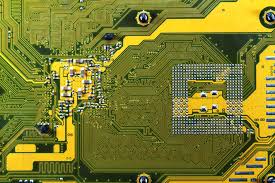
Can a Circuit Board Be Used for High-Performance Computing?
An effective way to reduce signal interference is to use a capacitor, which will store electrical energy and release it when necessary. Capacitors are usually made of two conductive layers separated by an insulating material. Another popular option is a diode, which allows electric current to flow in one direction but not the other. The most common type of diode is the LED, which is used to convert a physical element into an electronic signal.
Another way to improve signal integrity is by using stripline or microstrip routing. This will reduce skew and common mode noise in signal lines. It is also critical to use controlled impedance routing for transmission lines, as this will help to avoid signal reflections and accumulated losses. Circuit boards are typically composed of non-conductive materials, such as fiberglass or plastic, layered with conductive pathways made of copper. These pathways, often referred to as traces, serve as the “roads” that direct electrical signals to various components on the board.
Finally, a good PCB will have a ground plane and solder mask to prevent electrical interference from external sources. It should also have power integrity features to minimize voltage fluctuations and power supply instability, which can lead to component failure. A good PCB will also have adequate shielding and RF filtering to prevent electromagnetic compatibility (EMC) issues, which are common in wireless communications devices. It is important to follow EMC standards and regulations, especially in mobile/IoT, data center environments, and avionics applications.