

How a Flex PCB Manufacturer Creates Custom Designs
Flex PCB Manufacturer Creates Custom Designs
A flex PCB is a flexible circuit board that’s used in many types of devices and applications. Flex PCBs are designed to be more compact and resilient than a standard PCB, and they offer a number of additional benefits over their rigid counterparts. These advantages include dynamic flexibility, which allows the device to be manipulated as necessary without damaging the conductive traces and components inside. They also offer a wide range of connections, such as hot bar solder, which eliminates the need for a connector between a hardboard and flex circuit by using a heat gun to melt a solid copper bar onto a flex PCB’s pads.
The process of creating a flex circuit starts with patterning the conductive traces on the substrate. This can be done using either additive or subtractive techniques, depending on the design and manufacturing requirements. In addition, flex circuits can be single-sided, double-sided, or multi-layered, providing a variety of connection options to fit your specific needs.
Once the conductive patterns are etched, holes are plated in a similar way to rigid PCBs. In some cases, a thin layer of what is called a “stiffener” is added to the flex substrate to add mechanical support and help maintain stability. The resulting rigidity also helps prevent damage to the components during flexing.
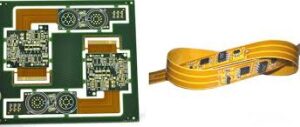
How a Flex PCB Manufacturer Creates Custom Designs
To ensure that the flex circuits are durable enough to meet your specific application, they must be made with high-quality materials and components. These include the flex-grade substrates like polyimide and adhesives, as well as the conductive elements and dielectric materials that are used to create the conductive patterns on the substrate. A reputable flex pcb manufacturer should have a rigorous quality control process that includes first-article inspection, in-process and end-product testing, and other standards to ensure consistent quality.
Another important feature of a good flex circuit is the proper bend radius, which is the minimum distance that a flex circuit can be bent without causing damage to its conductive traces or components. This is a critical factor to consider when designing a flex circuit, and it requires careful analysis and evaluation of the circuit’s overall layout and component placement.
The final step in the process of fabricating a flex circuit is cutting it to size. In high-volume production runs, this can be done with a hydraulic punch and die set, which is fairly expensive. However, for prototypes and low-volume runs, a blanking knife is used, which is a long razor blade that is bent into the shape of the flex circuit outline and affixed to a routed slot in a backing board (such as MDF, plywood, or thick plastic such as Teflon). The flex circuit is then pressed against the knife and cut out of the substrate.
When selecting a flex PCB manufacturer, you should check their experience and track record, as well as their pricing and lead times. You should also ask for references from previous customers to gain insights into their experience with the supplier’s products, customer service, and adherence to delivery schedules. Finally, you should look for manufacturers with certifications and industry standardizations like ISO to ensure that they are capable of producing reliable and accurate flex PCBs.